This discussion on the Flugleiter AKA Betriebsleiter prompted me to publish what happened to us at an Austrian airfield not long ago where the questionable actions of the flugleiter and another traffic compounded with my decisions, and their unnecessary use of the German language put us unknowingly and uncomfortably close to the other traffic in the circuit head on. I only knew the full details later upon review of the Flysto data and my inflight audio and video recordings.
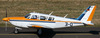
We were coming from the west for the NW-oriented runway and there was another, slower traffic coming from the East (I’ll call him Cessna).
The Cessna called 4NM out in German, which I did not understand. The flugleiter only responded with rwy in use. At this point I dont know whether the Cessna is a factor for us.
I reported in English leaving the waypoint W of the field and was advised by the flugleiter to report entering RH downwind (one of the VAC-prescribed tracks)
One minute later I report entering RH downwind and the flugleiter asks that I report RH base.
At this point I am still not aware of the position of the Cessna although I had heard their earlier report in German, but they had not made any other report yet.
One and a half minutes later I report turning RH base, more or less at the base position depicted on the VAC, about 2NM E of the airfield.
The flugleiter then asks the Cessna in German whether they are already at the waypoint E of the airfield (which is 4NM E of the airfield, the distance that the Cessna had reported 3.5 minutes ago).
The Cessna then answers back in German that they are past such waypoint and are (again!) 4NM East, inbound.
The flugleiter then asks us if we can “make a little bit longer downwind” since “one plane is before you”.
Note at this stage I am at base ready to turn final and have no clue where the other traffic is, other than, as reported, he is “ahead of us”. I am looking RH at finals but, unable to see any traffic between us and the airfield, I start turning left to “extend downwind” as requested.
At this stage, the Cessna calls back, this time in English , saying they “have the other traffic in sight just passing them and we are number one on final”. Our trajectories crossed on opposite headings less than 200m apart, although our closest distance was maybe 400m and by then we were already on a 45-deg diverging heading back to downwind. We never saw them and we were not receiving their ADS-B broadcast, if any.
When the Cessna initially called 4NM out, they were over 10NM E doing 80KTS GS, while we were 7NM W doing 180KTS GS slowing down for circuit entry. When we crossed we were both doing 105KTS GS.
Neither of us three exercised our privileges appropriately. I was fooled and even may candidly say I let myself be fooled. I learned my lessons.
What would you have done differently?
What does SERA say about this situation?
What prompted the flugleiter actions? How must those actions be read in the light of the current regulation in Austria? And in Germany?
Antonio wrote:
What would you have done differently?
In a case like this I would call the Cessna and ask for its position and level and hope that the pilot understands English. If I didn’t feel reasonably confident of the other aircraft’s position, I would leave the area until the other aircraft had landed.
What does SERA say about this situation?
SERA says you should “observe” other traffic and “conform with or avoid the pattern of traffic formed by other aircraft in operation”. Then of course the usual right of way rules including giving way to aircraft in final. But if you can’t see the other aircraft and don’t have reliable info on its position, then this is very difficult…
I would definitely ask for clarification of position of the other traffic. That’s what I do in France, Italy, Austria etc. If I’m VFR, no separation, approaching to destination and I hear someone on frequency speaking local language, I try to get position and intentions info in English. And I put special attention to TIS/ADS-B.
Í don’t know the answers to your other questions but I guess locals will jump in.
To me this sounds like an everyday problem in multi language operations where the pilot cannot understand the local language.
I have no solution other than to avoid uncontrolled airports, or (if not avoidable) proceed with extreme caution and if possible fly on a weekday (when many of them, particularly aeroclub owned ones, tend to be quiet or dead).
@Emir wrote:
I would definitely ask for clarification of position of the other traffic. That’s what I do in France, Italy, Austria etc. If I’m VFR, no separation, approaching to destination and I hear someone on frequency speaking local language, I try to get position and intentions info in English. And I put special attention to TIS/ADS-B.
@Airborne_Again wrote:
In a case like this I would call the Cessna and ask for its position and level and hope that the pilot understands English. If I didn’t feel reasonably confident of the other aircraft’s position, I would leave the area until the other aircraft had landed.
Same here – if I can’t figure out where people are, I am not comfortable. I’ll either do a couple of orbits away from the airfield to wait until I can complete my understanding of the traffic in the area, or just fly away for a while. I’m still baffled by the number of people who don’t send out either FLARM or ADS-B. The limitations of the eyeball are well known. Thankfully the sky is big, and midair collisions are rare, but I keep in mind that collisions mostly happen near airports.
What would you have done differently?
I actually wouldn’t fly to a small airfield in another country and expect that people there do not “unnecessarily” use their local language. There a lots of people who don’t speak English (well), especially older ones. If I fly there without even basic language skills, I put everyone at risk (including myself).
How can I mitigate the situation:
I agree 100% except point 1 which I think is a trap because all you need is for somebody to reply and you won’t understand it  We have some phrase lists here but unless you can basically understand the language, IMHO it is, as I say, just a trap.
But then I have the debatable luxury of living in a non schengen country so a towered airport cannot be avoided most of the time…
That is generic advise.
The first point is a good one: I need to work on my German.
The other two mostly void the point of GA (with Schengen+GAR-type arrangements) for me and a lot of other travellers: travelling directly between small airfields, otherwise I’d take airlines. I live in one of the best-connected places in Europe.
Specifically, in this case, my two counterparts spoke and apparently understood English language, thereby those justifications for keeping the circuit German-only did not apply.
At LESB we use Spanish language but 90% of local pilots, when aware of any ENglish speaker around, switch to English. Some of us make calls in both languages, just in case.
Antonio wrote:
What would you have done differently?
First point, I love flying to small airfields in other countries and do this frequently (where either communication in EN is possible or I understand the local language, which is true for quite some places).
Second point, in a situation where communication is mostly done in a (local) language that I don’t understand it’s even more important to stay in touch. Your only source of information is the Flugleiter (or the person who does COMM) who speaks with you in english. You were not aware of where the other traffic was because you didn’t understand what was spoken in German. But the Flugleiter wasn’t aware of what he commanded, because a) the other traffic lied about their position in order to not have to give away the approach stated wrong position information; b) the Flugleiter was not aware about the enormous speed delta of the two Cessna planes; and c) decided against SERA in kicking you out of the traffic pattern, which was surprising.
What would I have done differently. In the very situation where the Flugleiter commands me to do something I also would have followed the instructions, because it’s not the right time to discuss (only if I was aware of the danger).
What could one do better? Try to communicate as clear and precise as possible, e.g. “5 miles out, that is 2 minutes to land” or “right downwind still doing 180 knots” (in case there is other traffic around). If you anticipated the potential danger situation you could have even stated something like “now in the traffic pattern on right downwind on 180 knots, the other mentioned traffic not in sight” (but this is easy to tell sitting in front of a PC). If you would have told him that you still do 180 knots on downwind the Flugleiter could have understood that putting you (against the law / against good order) out of the traffic pattern is not a good idea. He was simply not aware of the situation and the potential danger that he put you in by kicking you out of the traffic pattern.
Other than that: in such a situation I never enforce my rights (assuming that I could also have mistaken the situation). When something’s not 100% clear to me, or there’s traffic around that I don’t see, I abort the approach and start again. Did that more than once 
Thomas_R wrote:
I actually wouldn’t fly to a small airfield in another country and expect that people there do not “unnecessarily” use their local language.I disagree on this. English is the main international aviation language. Most (European) countries do manage to push English at a certain basic level to their pilots. And it’s simply undoable and inhuman to expect to learn quite a few phrases in each European language. Personally, I’m quite happy to speak three languages more or less fluently, and a few more a little to tiny bit. But when it comes to e.g. Slavic languages, my knowledge stops after a friendly local greeting, but this wouldn’t resist me to visit the Baltics, Poland or Czech Republic.